
Anyone can rent the same models. Your edge is how you work.

TL;DR: Every frontier model is available to your competitors at the same price, so the model itself is not a strategy. The durable edge is how your company works: the workflows, handoffs, and decisions no vendor can rent out. Map that, rank it by how fast AI pays back, and keep the resulting picture as an asset you own.
Your competitor can buy the exact model you use. Same weights, same API, same price. The frontier is a rental market now, and everyone has a key. A real AI adoption strategy for enterprises starts one layer down: in how your company actually works.
That is the part nobody else can rent.
The model is a commodity. Your workflow isn’t.
For a while, access was the advantage. You had the better model, so you won. That window is closed. Capability that felt like magic last quarter ships as a default this quarter, to you and to everyone selling against you.
What doesn’t commoditize is the specific way work moves through your company. How a deal gets from a first call to a signed contract. The handful of people every hard question routes through. Where a request sits for two days waiting on an approval nobody remembers designing. That flow took years to form, and no vendor sells it.
So the question stops being “which model.” It becomes “where does AI actually pay back inside our work” — and that answer is yours alone.
Why most enterprise AI programs stall
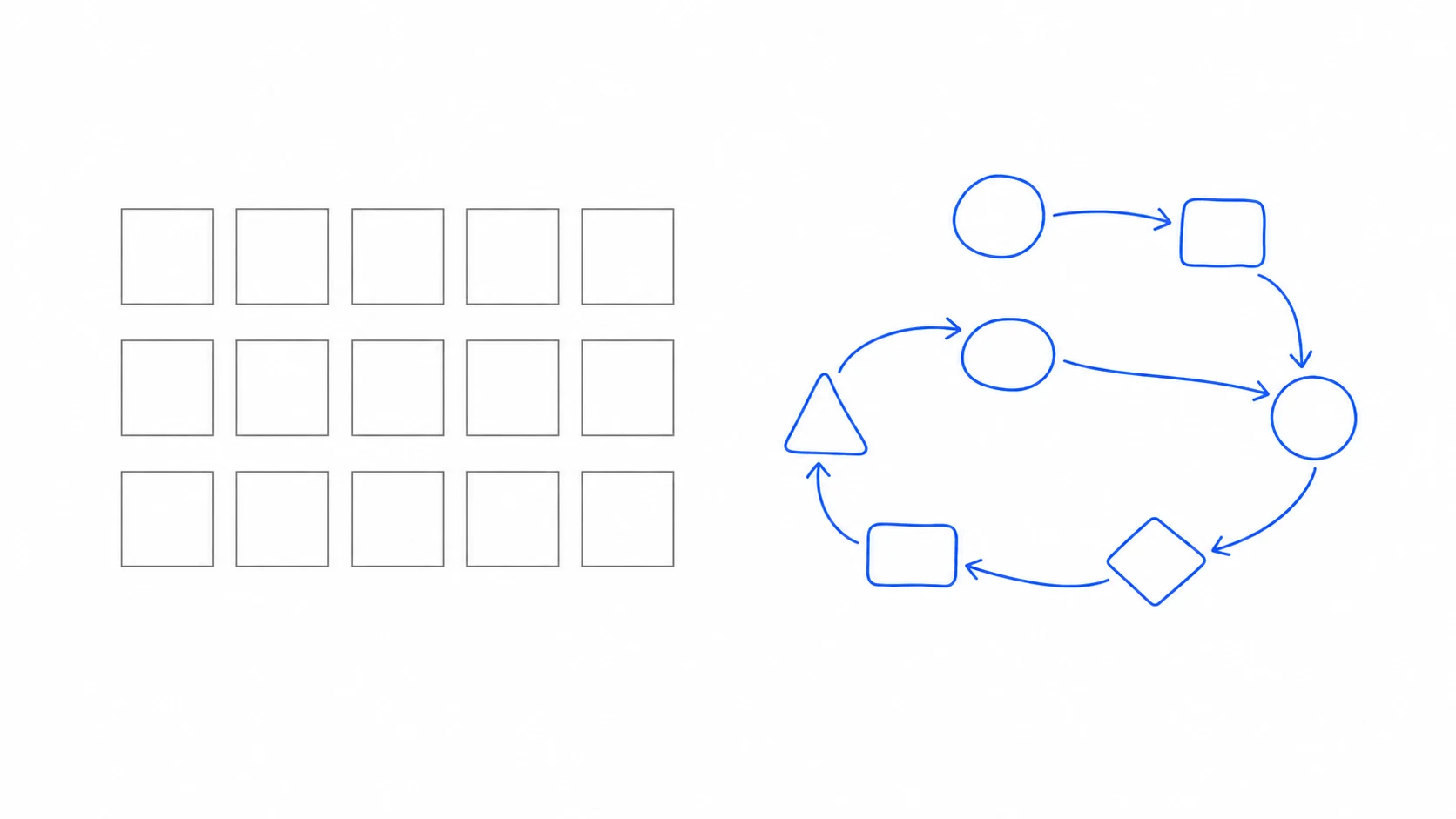
Most AI efforts start from the tool, not the work. A team picks a shiny capability, runs a pilot that demos great, and then it dies quietly because it never touched a real bottleneck. The pattern repeats across departments. A year later there are twelve pilots and no compounding advantage.
The reason is simple. The company automated what was easy to see, not what was costing the most. It optimized a task that was already fast and left the two-day approval untouched. It bought a chatbot when the real problem was that most of the hard answers still route through a handful of people who are always in meetings.
You cannot rank what you cannot see. And most leaders are ranking AI projects off intuition, vendor decks, and whoever lobbied hardest last week.
Encode the work, then decide
A useful AI adoption strategy for enterprises does the boring thing first: it maps how work really happens, then ranks where AI pays back.
Concretely, that means finding four things most companies can feel but can’t point to:
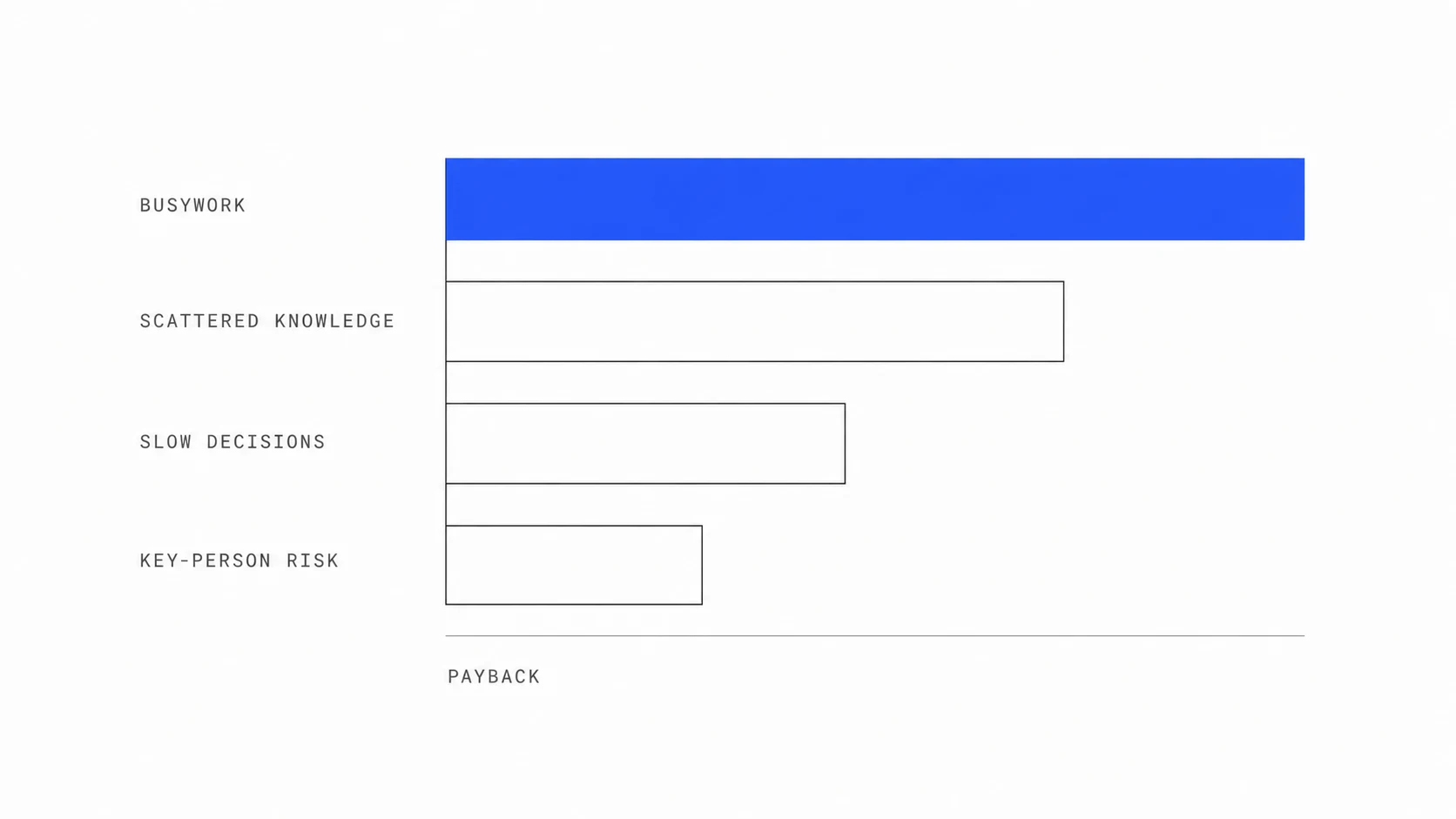
- Busywork — the same action done by hand dozens of times a week.
- Scattered knowledge — answers that live in someone’s head, or across six tools, instead of one place.
- Slow decisions — the steps where work sits and waits, and the average time it takes to get a yes.
- Key-person risk — the expertise that only exists in a couple of people, which makes the whole company fragile.
Once you can see those, the roadmap writes itself. You automate the busywork first because it repays fast. You put the scattered knowledge somewhere a model can retrieve it. You attack the slow decision, not the fast one. And every step is ranked by the hours it gives back, not by how impressive the demo looked.
That is the difference between owning a strategy and renting a tool.
Own the roadmap, own the advantage
There is a second trap worth naming. Even teams that map their work often hand the result to a vendor and rent the outcome too. Now the thing that was supposed to be your edge lives in someone else’s product, on someone else’s terms, with your data as the fuel.
The point of encoding your workflow is that you keep it. The map of how your company works is an asset. It should improve over time and stay yours when the contract ends. If your AI advantage evaporates the day you switch providers, it was never an advantage. It was a subscription.
Where that map lives is a deployment choice. Run Silow in zero-access mode (self-hosted, VPC, or on-prem) and the raw captures never leave your perimeter: we don’t receive, access, or store them. That is the mode where “data never leaves your walls” is literally true. Run the default cloud pipeline and raw captures transit to our cloud, get filtered and anonymized server-side, and are deleted within 48 hours. PII is stripped, no human reviews raw captures, and we never train on your data. Either way, the finished map — the asset — is yours.
The boundaries are the same in both modes. No keystrokes. No webcam or mic. No message content. No individual scoring, no emotion inference, no automated employment decisions. An Art. 28 processor DPA is available today, and it names the subprocessors in the cloud path. Our SOC 2 audit is in progress and ISO 27001 is on the roadmap — we’ll tell you when they’re done, not before.
Own the map. Rank the work. Roll out what pays back. Keep the data. That order is the whole strategy, and it is available to any company willing to look at its own work.
Where to start
You don’t need a six-month consulting engagement to begin. You need a measured picture of where the hours actually go, ranked by where AI repays the fastest — and you need to own that picture.
That’s what we built Silow to do. It maps how your team really works, surfaces the busywork, scattered knowledge, slow decisions, and key-person risk, and turns them into a ranked AI plan your company owns. The map stays yours. Weeks, not months.
If you want to see where AI actually pays back in your work — book a call.

Nikita started Silow after watching company after company buy AI it never used — the tools were fine, but nobody could say which work was worth automating. He leads product and the company, and writes most of what you read here.